+86-755-88868631
4.9 GOOGLE RATING
+86-755-88868631
4.9 GOOGLE RATING
Before comparing the three types, it helps to establish what a channel letter actually is. A channel letter is a three-dimensional sign element fabricated from aluminum or stainless steel, forming the shape of individual letters, numbers, or logo elements. The letter has:
◉A face: The front surface, typically transparent or translucent acrylic
◉Returns: The sides that give the letter its three-dimensional depth (typically 75-125mm deep)
◉A back pan: The rear of the letter, typically aluminum sheet, which mounts to the building surface
Inside the letter, an LED strip provides the illumination. The type of illumination determines how the letter appears lit at night — and this is where the three types diverge.
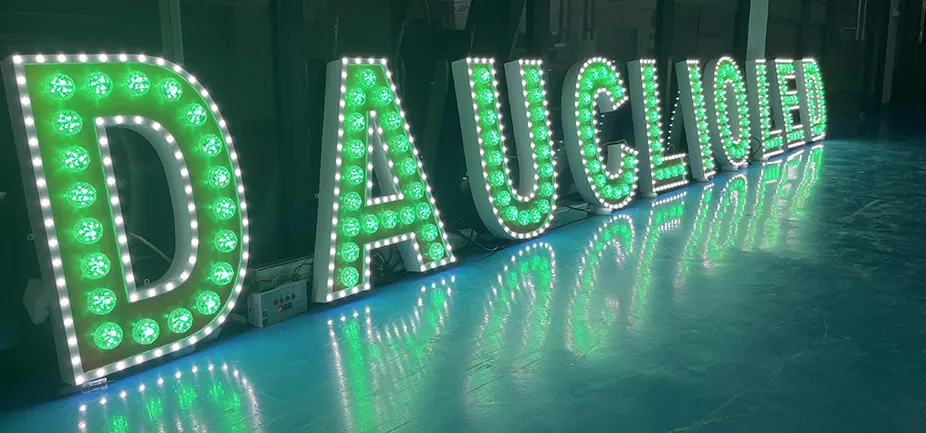
How it works: The LED strip is installed inside the letter, facing toward and illuminating the acrylic face from behind. The letter face is translucent, and light is visible through the face from the front.
Visual appearance:
◉Day: A colored three-dimensional letter, with the face color matching the brand specification
◉Night: The letter face glows with the illuminated color. The return (sides) and any exposed back pan are not directly lit.
Face material options:
◉Translucent acrylic: Light passes through uniformly, producing a glowing letter face. Face color can be any acrylic color.
◉Opal/white diffusing acrylic: Produces a bright, even glow across the entire face. Used with colored LED strips for brand color accuracy.
◉Perforated acrylic: Allows more light through while partially showing the underlying structure. Less common.
Typical applications:
◉High-street retail (clothing, food, pharmacy)
◉Supermarkets and grocery stores
◉Petrol station and automotive branding
◉Fast food and QSR restaurant exterior signs
◉Shopping mall tenant fascia signs
Advantages:
◉Maximum nighttime brightness — all light exits through the face
◉Clear brand color reproduction at night
◉Visible from long distances; ideal for high-traffic roads
◉Relatively straightforward to manufacture and install
Disadvantages:
◉No daytime illumination advantage (the face appears as a colored panel in daylight)
◉The “standard” look — extremely common, less distinctive than halo-lit alternatives
How it works: The LED strip is installed facing backward, illuminating the wall surface behind the letter rather than the letter face. The letter face is solid (opaque), and the illumination creates a glowing “halo” of light around the perimeter of the letter on the wall behind.
Visual appearance:
◉Day: A three-dimensional letter of the face and return color (typically metallic gold, silver, or a brand color)
◉Night: A dramatic halo of light emanating from behind each letter, with the letter itself appearing as a dark silhouette against the glowing surround
Face material options:
◉Brushed stainless steel (most premium — gold or silver finish options)
◉Mirror-polished stainless steel
◉Painted aluminum (any RAL color)
◉Acrylic in solid colors (the face itself does not illuminate in halo-lit)
Halo illumination color: Any color via RGB LED strip — the wall surface glows in the LED color. Warm white is classic; brand colors are increasingly common.
Typical applications:
◉Premium hotels and hospitality brands
◉High-end retail and luxury brands
◉Corporate headquarters reception
◉Upscale restaurants and bars
◉Any application seeking a premium, distinctive aesthetic
Advantages:
◉Premium, distinctive visual effect unavailable from any other sign type
◉The sign is impressive in daylight (premium materials) and at night (dramatic halo)
◉Can justify premium pricing at luxury brand installations
◉Less common than front-lit — automatically more distinctive
Disadvantages:
◉Lower nighttime brightness (the face is not directly illuminated; only the halo is visible)
◉Requires a specific minimum wall-to-letter gap (typically 50-75mm) for the halo to form and spread
◉More complex installation (precise standoffs required for consistent halo width)
◉Higher cost per letter than front-lit due to material (stainless steel or premium finishes)
Some installations use dual LED strips — one facing forward to illuminate the face and one facing backward to create a halo. This maximizes nighttime presence.
Best for: High-value locations where maximum visibility is needed while maintaining the premium halo aesthetic — airport retail, premium urban flagship stores.
| Factor | Front-Lit | Halo-Lit | Front + Halo |
| Nighttime brightness | Highest | Moderate | Highest |
| Aesthetic distinctiveness | Standard | Premium | Premium + bright |
| Daytime appearance | Average | Premium (metal finish) | Premium |
| Return material | Aluminum | Stainless / premium | Mixed |
| Face material | Translucent acrylic | Solid/opaque | Translucent acrylic |
| Relative cost | Lowest | Moderate | Highest |
| Best for | Retail, QSR, high traffic | Luxury, hospitality, corporate | Flagship retail, airports |
Choose front-lit if: You operate in a high-traffic retail environment where maximum nighttime visibility is the priority, budget is moderate, and the brand aesthetic is mainstream retail or food service.
Choose halo-lit if: Your brand positioning is premium or luxury; the building architecture supports standing-off letters from the wall; and a distinctive, high-end nighttime aesthetic is more important than maximum brightness.
Choose front + halo if: You require maximum visual presence for a flagship location and have the budget for the most complete solution.